
The 113 and the 'Fear' Narrative: An Honest Audit of Abhishek Sharma's Numbers
अभिषेक शर्मा ने वेलिंगटन में न्यूजीलैंड के खिलाफ 38 गेंदों पर 113 रन बनाए (स्ट्राइक रेट लगभग 297; 9 चौके, 11 छक्के; 102 रन यानी 90.3% बाउंड्री से)। यह विदेशी जमीन पर आया प्रदर्शन है, जो 'फ्लैट-ट्रैक बुली' आलोचना का मजबूत जवाब है, लेकिन रिपोर्ट में मैच का नतीजा, टॉस और पिच रिपोर्ट नहीं दी गई — इसलिए आलोचना खारिज नहीं, स्थगित होती है। करियर आंकड़े (71 टी20, 33.33 औसत, 196 स्ट्राइक रेट, 4 शतक) सत्यापन-लंबित हैं; 196 पूरे करियर का आंकड़ा है या हालिया दौर का, यह स्पष्ट नहीं। 26 साल की उम्र में वनडे और टेस्ट में शून्य कैप — यह सबसे महत्वपूर्ण तथ्य है और बहु-फॉर्मेट भविष्य अनसुलझा है। आईसीसी टी20 रैंकिंग भारित प्रणाली है, यानी हालिया फॉर्म का संकेत, बहुवर्षीय प्रभुत्व का प्रमाण नहीं। संजू सैमसन और वैभव सूर्यवंशी के रूप में आंतरिक प्रतिस्पर्धा वास्तविक है। कोई सत्यनिष्ठा, शासन या वित्तीय जोखिम नहीं; मुख्य जोखिम करियर-आकार और 'अगला आइकॉन' नैरेटिव से आने वाला बैकलैश है। असली कहानी 'आलोचकों को चुप कराना' नहीं, बल्कि यह है कि भारत के पास विश्वस्तरीय टी20 पावरप्ले संपत्ति है जिसका व्यावसायिक मूल्य खेल-सत्यापन से पहले तय हो रहा है।
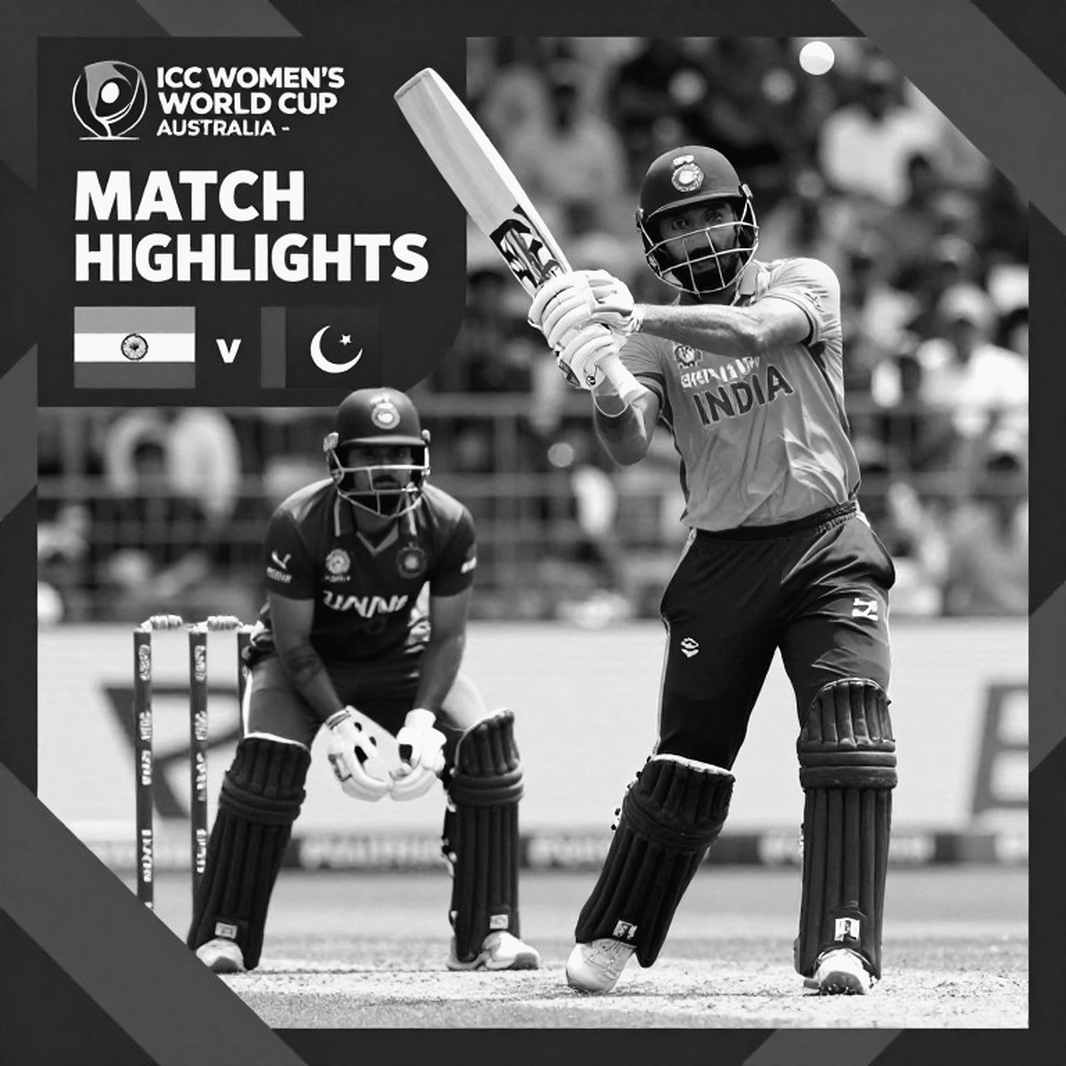
113 off 38 balls in Wellington. A strike rate of roughly 297. Nine fours, eleven sixes. In other words, 102 of those 113 runs came from boundaries — 90.3 percent. This is not an ordinary innings, and calling it ordinary would be wrong too. But using this single innings to declare Abhishek Sharma 'Indian cricket's next icon', and to assert that the 'flat-track bully' charge is now closed — that is not cricket analysis, it is cricket romance. The gap between the two is the subject of this report.
Start with what genuinely supports the analysis. Wellington is an away venue for India. In New Zealand, wind is a structural variable and early seam movement is common. If the pitch did have grass and the ball was moving, then 113 off 38 is the strongest possible answer to the charge of being a batter who only scores on flat decks. This is an overseas performance at international level, and the significance of that fact should not be understated.
But pause there. Three basic pieces of information about that innings are absent from the report as given: the match result, the toss, and the pitch report. It is not even stated whether India batted first or chased, or who won. For a piece whose entire premise rests on one innings, the omission of the result is itself a signal.
Second, the composition of that innings was unusually boundary-dependent. 90.3 percent of runs from fours and sixes, and just 11 runs off the remaining 18 balls — a rotation strike rate of roughly 61. This is a highly aggressive, high-variance profile. On the day the boundaries come, the score becomes 113. On the day the pitch is slow, the ball does not come onto the bat, and the boundary supply is interrupted, this profile has no visible secondary scoring mechanism. That is the concrete technical basis of the 'flat-track' criticism, and this innings does not refute it — it postpones it.
Now the career numbers. The report states 71 T20s, an average of 33.33, a strike rate of 196 and four centuries. The combination is internally consistent — roughly 1,157 balls faced and about 68 dismissals fits. But 71 T20 caps at 26 with not a single ODI or Test is an unusually high figure. It is possible the number covers a broader T20 career rather than T20Is alone, or that 196 is a recent-window strike rate rather than a career rate. Until these are confirmed against ICC and ESPNcricinfo records, they should be treated as verification-pending.
That verification matters especially because the report's 'consistency' claim is its weakest link. The only consistency metric anywhere in the piece is the ICC ranking. No averages, no rolling twelve-month splits, no home-away breakdown. And the ICC T20I ranking is itself a weighted system that heavily favours recent performance. It is an indicator of recent form, not proof of multi-year dominance. A return to No. 1 can reverse within a very short span.
On the technical claims, the report quotes Salman Butt saying there is 'calculated risk, not slogging' in his game. That assessment may well be correct, but it is testimony, not evidence. Verifying it would require a distribution of dismissal modes — how often bowled or lbw playing across the line, how often caught in the deep — and a scoring split by delivery type: short ball, full ball, spin, left-arm pace. None of that is provided.
The most important fact, mentioned only in passing, is this: zero ODI and zero Test caps at 26. Every data point here therefore belongs to the format with the shortest feedback loop and the widest variance. Mohammad Kaif's public demand for an ODI chance indicates this is a live selection debate, not a settled matter. It is a question of selection policy, not of eligibility — Abhishek was part of India's 2026 Under-19 World Cup-winning squad under Rahul Dravid.
The selection landscape deserves attention too. Sanju Samson and Vaibhav Suryavanshi are named as competitors for the same slot. Sharda Ugra's observation that 'everyone thought Vaibhav was going to be the next superstar, but Abhishek came and snatched that place' is the most explicit admission of how India's star-making machinery works. There is a single superstar slot, and occupancy is decided by recency, not by career accumulation. That is a media-market observation, not a cricketing one.
On the IPL and commercial side, the most useful strategic insight in the report is the Sunrisers Hyderabad partnership with Travis Head: deciding the fate of the match in the first six overs. That is a real, measurable T20 skill — powerplay run-rate inflation. But it is a role value, not a format-transcending value. And this is precisely where commercial and sporting value blur. Several paragraphs at the end of the report are devoted to endorsements and marketability, while the technical case rests on one innings. Tellingly, the report has to insist that 'his real identity remains his bat, not off-field glamour' — a sentence that only needs writing when the visible trend runs the other way.
The Yuvraj Singh mentorship and the route from the 2026 Under-19 cohort to the IPL is the most durable industry signal. A former left-handed all-rounder shaping a left-handed power-hitter through the Covid shutdown is a replicable development model, and its half-life will run far longer than one innings.
On risk, there is no integrity, governance or financial signal to flag — that should be stated plainly. The risk sits in two places. First, career-shape risk: being the world's best T20 batter while uncapped in the other two formats is a stable outcome only if the format landscape stays as it is. It will not. Second, narrative-backlash risk: 'next icon', 'face of a new generation', and placement inside the Gavaskar-Tendulkar-Kohli-Rohit lineage — the most heavily loaded comparison framework in Indian cricket, with a historically very low fulfilment rate.
The conclusion is clear. 113 off 38 is genuinely extraordinary, and the away context is a real point in his favour. But the real story is not 'he silenced his critics'. The real story is this: India has produced a world-class T20 powerplay asset whose multi-format future is entirely unresolved — and whose commercial value is being priced ahead of that resolution. The next three to five innings, especially on seam-friendly surfaces, will move this debate forward with more honesty than one knock can.
संबंधित खिलाड़ी
अनुशंसित
Bangladesh Before Mirpur Test: Spin Preparation, the Old Opening Worry, and a Coach's Mysterious Exit2026-10-30
The Pallekele Rain and Asian Cricket's Unfinished Scorecard2026-10-30
Sadman Islam's 99*: The Top-Order Truth Hidden Inside Bangladesh's 213/32026-10-29
The Pink Jersey and the Missing Ledger: Pakistan's Charity Kit, the Babar–Shaheen Auction, and the Number Nobody Published2026-10-26
269 Names, Zero Prices: BCB's D3 Points Auction and the Legitimacy It Borrowed2026-10-25
अनुशंसित
Light Stopped the Day, the Scorebook Kept Counting: Bangladesh 213/3 at Mirpur2026-10-29
Abhishek's 35-Ball Hundred and the 118-Run Powerplay: The Empty Line on the Scorecard Where the Match Was Actually Decided2026-10-30
Asian Cricket's Double Face: A Billion-Dollar Market, a Fracturing Calendar and a Shifting Balance of Power2026-11-01
Mirpur's Slow Echo: Shadman 99 Not Out, Hridoy Stretchered Off, Bangladesh 213/32026-10-30
Harry Brook: A Four-Match Ledger, an Anonymous Witness, and the 'Best Tactical Captain' Label2026-10-30
Sachin’s Mother’s Plate, 1.2 Million Likes and the Hungry Calendar of a Cricket Newsroom2026-10-30
अनुशंसित
Template Full, Evidence Empty: The Costliest Error in Cricket Analysis Isn't the Lie, It's the Hollow Frame2026-11-01
A Mirpur Morning: Shanto's Small Targets and the Arithmetic of Bangladesh's Six Tests2026-10-28
The Trade Window's Real Score: Retention Slabs, the Wage Bill, and the Names the Press Release Leaves Out2026-11-01
Sachin’s Mother’s Plate, 1.2 Million Likes and the Hungry Calendar of a Cricket Newsroom2026-10-30
Tilak's 26 catches, Arshdeep's 38 wickets: the workload ledger hiding under the record line2026-10-25
Abhishek Sharma: 113 Off 38 and a 118-Run Powerplay — the Arithmetic Closed in the Sixth Over2026-10-30