
Rishabh Pant's Fitness Test: One Day in November That Will Decide the Arithmetic of India's New Zealand Tour
प्रश्न: ऋषभ पंत का फिटनेस टेस्ट कब है और यह क्यों महत्वपूर्ण है? उत्तर: ऋषभ पंत नौ नवंबर को उत्कृष्टता केंद्र में फिटनेस टेस्ट देंगे। यह सामान्य मेडिकल जाँच नहीं, बल्कि पूर्ण तीव्रता का मैच सिमुलेशन है, जिसमें उन्हें साइड स्ट्रेन से उबरने के बाद टेस्ट क्रिकेट के भार के लिए तैयार होना साबित करना होगा। यह इसलिए महत्वपूर्ण है क्योंकि न्यूजीलैंड में पहला टेस्ट उन्नीस नवंबर से शुरू होने की उम्मीद है — यानी केवल दस दिन की खिड़की बचती है। प्रश्न: दस दिन की खिड़की में क्या समस्याएँ हैं? उत्तर: इन दस दिनों में तीन काम पूरे करने हैं — परीक्षण का परिणाम और चिकित्सकीय समीक्षा, न्यूजीलैंड की उड़ान तथा अभ्यास सत्र, और विदेशी परिस्थितियों में अनुकूलन। इस बीच दूसरा सिमुलेशन संभव नहीं है, इसलिए सीमा-रेखा वाला परिणाम द्विआधारी फ़ैसला बना देगा — अधूरी तैयारी के साथ खेलना, या पूरी सीरीज़ से बाहर होना। प्रश्न: साइड स्ट्रेन विकेटकीपर के लिए इतना चिंताजनक क्यों है? उत्तर: साइड स्ट्रेन पेट की तिरछी मांसपेशियों की चोट है, जो अचानक घुमाव और बगल की गति से बढ़ती है। विकेटकीपिंग में लगातार झुकना, एक तरफ़ झपट्टा और दोहराव होता है, जिससे इन मांसपेशियों पर असममित दबाव पड़ता है। इसका पुनरावर्तन दर ऊँचा है और टेस्ट के पाँच दिन का भार किसी भी सिमुलेशन से बहुत अधिक है। प्रश्न: अगर पंत न्यूजीलैंड नहीं जाते तो क्या होगा? उत्तर: वे चौदह नवंबर से शुरू होने वाली सैयद मुश्ताक अली ट्रॉफी खेलेंगे, और उसके बाद विजय हजारे ट्रॉफी। यह क्रमिक और नियंत्रित वापसी का रास्ता है, जो जोखिम प्रबंधन के लिहाज़ से सुरक्षित माना जा सकता है। लेकिन ध्यान रहे कि घरेलू टी20 में मैच फिटनेस, टेस्ट मैच फिटनेस के बराबर नहीं है। प्रश्न: चयन समिति और उत्कृष्टता केंद्र की भूमिका क्या है? उत्तर: उत्कृष्टता केंद्र का ईमेल सीधे चयन समिति तक पहुँचा है, जो दर्शाता है कि यह केवल चिकित्सकीय निर्णय नहीं, बल्कि चयन का निर्णय भी है। कोच गौतम गंभीर ने कहा है कि उनके पास कोई अपडेट नहीं है, जबकि केंद्र ने शनिवार को ईमेल भेज दिया था — यह सूचना का अंतर है, न कि कोई नियम का उल्लंघन।
The morning of November 9 is not an ordinary date on Indian cricket's calendar. That is the day Rishabh Pant will undergo his fitness test at the Centre of Excellence — and this is no routine medical check but a full-intensity match simulation. A wicketkeeper-batter recovering from a side strain must prove that he is not merely injury-free, but fit enough to absorb the physical load of five days of Test cricket. Whatever the outcome, its impact will not be confined to one player: it will simultaneously shape the architecture of India's New Zealand tour, the selection committee's strategy, broadcast value and the domestic calendar.
Look beneath the surface and one thing becomes clear: this story is well beyond the question of whether Pant is fit. The real question is whether it is worth risking a player whose injury is, by its very nature, a recurrent one, on foreign soil in a Test series. And that decision is institutional as much as medical, because the Centre of Excellence's email went directly to the selection committee, not merely to the team management.
What the fitness test is, and why it differs from 'clearance'
The first thing to understand is that this is not a process of issuing a routine medical fitness certificate. Declaring a player 'recovered from injury' and deeming him 'match-ready' are two different claims. The first says the tissue has healed, there is no pain, and everyday movement is normal. The second says the same tissue will hold up under maximum load, sudden force production and the stress of repetition.
That is why the Centre of Excellence has made match simulation the standard. It is the correct protocol. The defining feature of a side strain is that it appears completely quiet at rest and returns abruptly under explosive movement. Sprinting between the wickets, lunging at the ball, diving, and the repeated squatting of wicketkeeping — all four place asymmetrical stress on the oblique and abdominal wall. Measuring muscle strength in a laboratory will not suffice; the only reliable test is full-intensity play on the field.
But the process has a limitation, and that limitation is time. The November 9 assessment happens on a single day. There appears to be no planned opportunity for a second look. If the result falls on the borderline — neither a full yes nor a full no — the selection committee will have no third option. The decision will become binary: either field an underprepared player, or rule him out of the entire series. That is the biggest structural weakness of this whole episode.
The arithmetic of ten days, which does not favour Pant
November 9 to November 19 — exactly ten days. Three separate things must be completed within them. First, the test result and the medical review that follows. Second, the flight to New Zealand, the time-zone shift, and a training block on arrival. Third, and most important, acclimatisation to foreign conditions.
Fitting all three into ten days is hard for any returning player. It is harder still for a batter coming back from a side strain, because his problem is not merely agility but balance and trunk rotation. New Zealand's air, with sharp swing and seam movement, demands that a batter wait until the last instant and then play with full body rotation. That is precisely the action that loads the oblique muscles most heavily.
Second — and this is often overlooked — a second simulation is not possible within ten days. If the player looks even slightly uncomfortable on November 9, there is no way to buy him more time. The team management's only remaining option would be to use him purely as a batter in the first Test while handing the keeping to someone else. That approach is rational, but it carries a hidden risk: if he breaks down while playing as a batter, the team has neither a backup keeper nor a spare batter.
Third, if clearance arrives late, the practice and acclimatisation window shrinks further. Arriving on a foreign tour and walking straight into a Test — especially without a competitive match for weeks — is risky. In Test cricket the first hour of the first innings is the most decisive, and it is also the hour that demands the most mental and physical preparation.
New Zealand, November, and what a green pitch really means
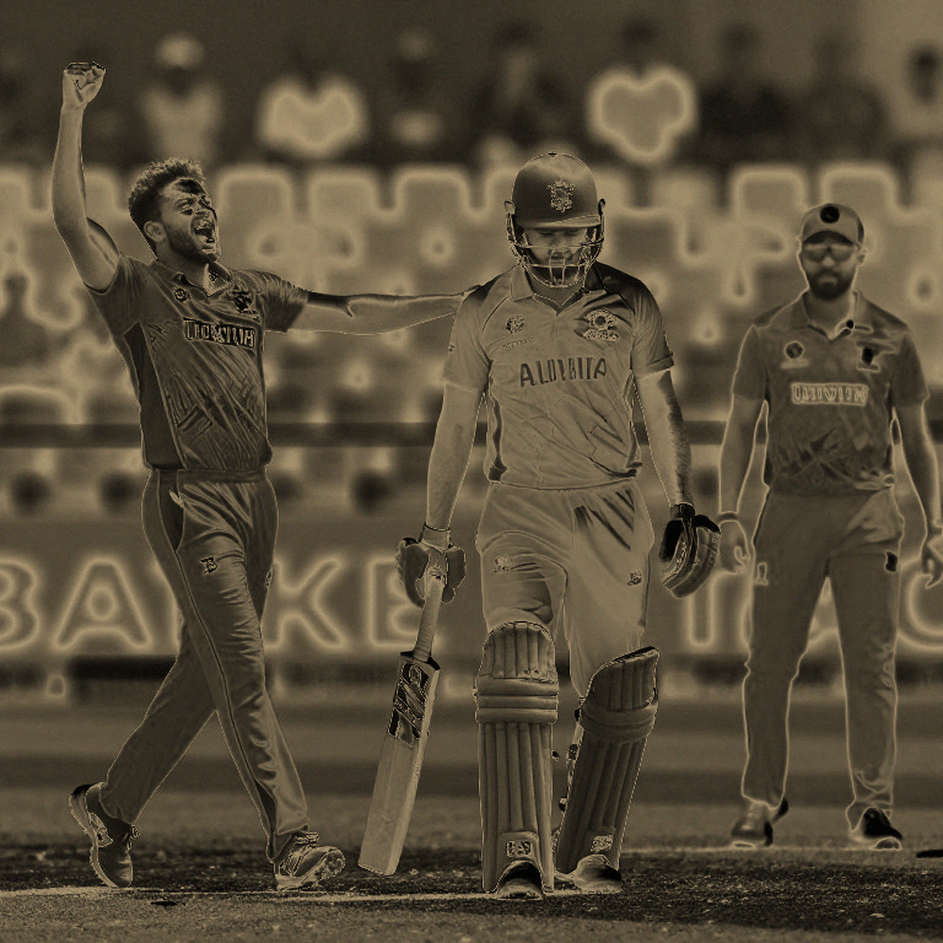
November in New Zealand is a specific cricket environment. Early in the season the pitches carry more grass, the air holds moisture, and the ball seams sharply. This is the environment in which Asian batters have historically struggled. That is not new information, but in the context of this story it is decisive.
Consider it: a batter returning from a trunk injury, whose primary strength is an aggressive, advancing style, is being placed on a surface where the ball deviates slightly on almost every delivery. On such a surface a batter must repeatedly correct his balance. Every correction is load on the obliques. This is why one section of analysts believes that if Pant is to be fielded on this tour, using him purely as a specialist batter in the first Test would be the wiser course — even though it disturbs team balance.
Another under-discussed factor is the presence of Indian audiences in New Zealand. This tour matters to the Indian broadcast market, and the presence of a name like Pant enhances that value. But from a purely sporting standpoint this factor is secondary; decisions should be based on performance, not on viewers. That distinction needs to be kept clear.
Test and T20: two different worlds, one player
One technical error is being repeated throughout this debate — treating match fitness in a domestic T20 tournament as equivalent to Test match fitness. They are not the same thing.
In T20 a batter faces a maximum of twenty overs and does not have to stay on the field for two or three continuous hours of batting. In Test cricket the same player is on the field for five days, bats twice, and, if keeping wicket, bends for every ball. Across a Test a wicketkeeper squats more than three hundred times in full — and that bending is not performed once but repeated continuously. For any side strain this is the harshest possible examination.
So playing the Syed Mushtaq Ali Trophy is not proof that a player is ready for Tests. It only certifies that he can bear the load of limited-overs cricket. That is useful but incomplete information. Selection committee members must understand this distinction clearly, because if they ignore it they will field a player who has not batted a long innings in weeks.
The reverse is equally important. If Pant does not go to New Zealand and plays the Syed Mushtaq Ali Trophy, he will be a significant draw in domestic T20. But that yields no direct benefit to the national team — because the country's attention will be on the Test in New Zealand. This is a paradox the Indian system must accept.
Side strain: the anatomy of the injury and the risk of recurrence
A side strain is not a minor pull. It is an injury to the oblique muscles of the abdomen, caused by sudden rotation, sharp bending or unbalanced force. In cricket it is common among fast bowlers, but it is rising among wicketkeepers and aggressive batters too — because the movements of both are asymmetrical.
Three things make this injury dangerous. First, its recurrence rate is high. Second, it presents late — a player feels a mild pull, keeps playing, and on the next explosive action the injury deepens. Third, its treatment is mainly rest and graded loading, which means full recovery takes time — and that time pressure falls on the player.
For a wicketkeeper the injury is especially serious because his posture itself is asymmetrical. He repeatedly drops to one knee, lunges in one direction, and turns the same way for every ball. This is why the medical team's key question is: can the player keep wicket for five continuous days, or should he be used only as a batter?
Answering that requires match simulation, but simulation alone is not sufficient. A single day's simulation cannot replicate five days of fatigue. That is the gap this report needs to underline — and it is the gap that turns a simple news item into a complex strategic problem.
Pant's record: why the risk is also justified
One thing is unambiguous: Pant is one of India's most impactful away Test batters. His counter-attacking hundreds in England (2026), Australia (2026-21) and South Africa (2026) are proof of his capacity. His Test batting average is around forty-four, which for a wicketkeeper-batter falls in the elite bracket — the traditional benchmark for the role is generally placed between thirty-five and forty.
Crucially, his value lies not in the average but in the situation. When the team is in trouble and the ball is moving, Pant's aggressive intent breaks the bowler's pressure. Against New Zealand's seam attack, that intent is the team's best tool. Without him India's middle order becomes comparatively defensive — and a defensive posture has usually failed against New Zealand's patient bowling.
A BCCI source summed it up: the team needs a player of Pant's stature. That sentence is not merely praise; it also indicates the direction of selection. But a second point follows: at his age Pant is in his prime (he was born in 2026), so his real problem is injury, not decline. That is good news — injuries can be treated, age cannot.
There is, however, a major caveat: the available information contains no detail on the severity of the strain, the recovery timeline, or the simulation parameters. The entire assessment of readiness rests on a test nobody outside has observed. That is not a lack of information but a concentration of it — the whole decision depends on a single point.
The selection committee's real dilemma
The question before the selection committee is not whether Pant is fit. It is whether he should be sent to New Zealand in this condition, when the alternative is that the team travels without him and he returns through domestic cricket.
This is no simple dilemma. On one side is the World Test Championship context, where every match's points matter. On the other is the protection of a long-term asset. If Pant is injured in New Zealand and is out for a long period, the damage will be far greater than one series.
One signal of this dilemma is that the Centre of Excellence's email reached the selection committee. If it were merely a medical report, it would have stayed with the team management. Including the selection committee means this is a selection decision, not only a medical one. That is what makes this story political as well, and why it is being discussed publicly.
Gambhir's 'no update' and the Centre of Excellence's email
The most intriguing detail is Gautam Gambhir's statement. He said he had no update. Yet reports indicate the Centre of Excellence had emailed the selection committee on Saturday.
This contradiction should not be blown up. It is not necessary for team management to share every medical detail publicly. The coach's silence may be a deliberate move — commenting on selection only fuels speculation. But the signal is also this: the coach stood deliberately distant and set no timeline, keeping the discussion focused between the player and the medical team.
Institutionally, a shift is clear — the Centre of Excellence's fitness approval now functions as a de facto veto over selection. The selection committee may hold formal authority, but the medical judgement determines the outcome. This is a global trend in high-performance sport, and in Indian cricket it is a significant shift in the balance of power.
Three players, one bottleneck: pressure on the Centre of Excellence
One detail in this story has been largely overlooked — the Centre of Excellence is currently handling three players at once. Rishabh Pant, Prasidh Krishna and Harshit Rana.
This matters because decisions on three separate clearances must be made in the same week, and each affects a different squad. Harshit Rana's clearance is expected on November 11 or 12, a Tuesday, and on November 20 he is due to play for India A at the Rising Stars Asia Cup in Doha. That means his fitness approval affects not only the pace combination for the New Zealand series but also the balance of the A team.
This reveals a structural truth: in Indian cricket a single institutional choke point controls multiple critical decisions. If pressure builds there, approvals arrive late — and late approvals raise risk.
The parallel path of the Syed Mushtaq Ali Trophy
If Pant does not go to New Zealand, he will play the Syed Mushtaq Ali Trophy starting November 14. That is not merely an option; it is a carefully constructed safety net.
That path has three stages. First, a return through T20, where load is lower and intensity higher. Then the Vijay Hazare Trophy in the fifty-over format, which demands longer batting. And then, if all goes well, preparation for Test cricket. This is a graded and controlled return — and from a risk-management perspective it is the most sensible route.
But here the calendar creates a direct collision. The Syed Mushtaq Ali from November 14 and the first New Zealand Test from November 19 — no player can physically play the opening matches of both. So the choice is not 'both' but 'one or the other'. This is reflected in Pant's own remarks, made in conversation with DDCA president Rohan Jaitley.
Pant's own words and what they mean
Pant has said he expects to travel on the tour; and if that does not happen, he will play the full Syed Mushtaq Ali Trophy.
That single sentence carries three signals. First, he did not say 'I will go' but 'I expect to go'. This is cautious language — language that subordinates his decision to the medical process. Second, he kept the alternative open, so that his credibility survives if clearance does not come. Third, saying he will play the whole tournament shows confidence in his recovery.
But there is a risk here too. If a player publicly says he expects to go, indirect pressure builds on the medical team. That pressure can, without anyone intending it, influence a borderline decision. This is not new in high-performance sport, but it must be acknowledged so that the credibility of the process holds.
The DDCA channel is also notable. The player spoke directly to the association president, not at a press conference. This is an unusual route, but an effective one — the message stays inside the system and avoids the heaviness of a formal public statement.
What India's middle order looks like without Pant
If Pant does not play, the entire architecture of India's middle order changes.
First, a Test-class wicketkeeper-batter who can bat at five or six is hard to find. Options are limited, and those that exist have little Test experience. Names like KL Rahul are discussed — experienced and capable of keeping — but his form on tour and his fitness are separate issues. It should be noted that this is analysis, not an official announcement.
Second, the problem is strategic. Pant's game is aggressive, and that aggression is the answer to New Zealand's disciplined seam bowling. Without him India must adopt a more defensive posture, which increases pressure on the bowlers and slows the scoring rate. On a green pitch, a slow rate is close to self-destruction, because it lets the bowler settle into rhythm.
Third, the problem is psychological. Pant's presence on the field is a factor for the opposition too. His existence forces bowlers to think. This psychological benefit does not show up in statistics, but it exists.
The World Test Championship context
India has consistently been in the top two of the World Test Championship table. That raises the stakes of this tour. Every match's points will count in the final standings, and one series result can change the direction of the next cycle.
Against that backdrop the selection committee faces dual pressure. On one side is the expectation of immediate results; on the other, the need for long-term balance. And this pressure has arrived at a time when the team is in transition.
It is also worth noting that India's bench strength is strong — the bowling attack is world class and there are batting options. But there is one specific exposure: a Test-class wicketkeeper-batter who can bat in the middle order. Filling Pant's place is not easy. That is what turns this from a simple injury story into a structural problem.
The full risk picture
The biggest sporting risk is that Pant is injured again in Test conditions. That risk is high, its likelihood moderate, and its impact severe. The reason is obvious — five days of keeping and two innings is far more than any simulation.
The second risk is that New Zealand's seam attack exposes a returning batter's technique and balance. That risk is also high. In such a scenario the player's confidence dips and he drifts away from his natural game.
The third risk is personnel — a backup wicketkeeper-batter will produce less at Test level. That risk is moderate, but if Pant is ruled out its likelihood becomes high.
The fourth risk is structural — the simultaneous load of three players on the Centre of Excellence. This can delay approvals, and delayed decisions are often riskier decisions.
The fifth risk is public opinion. Media and fan pressure favours Pant's return. That pressure can be useful for management and harmful too — if it starts to influence the medical decision.
Overall the risk level is medium-to-high. It rests on one thing: a ten-day window for a high-value returning wicketkeeper-batter, and an injury whose very nature is recurrence.
Three scenarios
The most likely scenario is that Pant passes on November 9, travels, and plays at least one Test. The domestic option will then quietly fall away as unnecessary. This is the base case.
The worst case is that he passes, travels, is injured again in the first Test, and loses both the rest of the series and the start of the domestic season. That is the most damaging outcome for both team and player.
The best case is that he passes, plays both Tests, scores in the middle order, and the injury is fully behind him. That is possible, but it should not be the basis for planning.
Broadcast and commercial side
This story's commercial dimension is limited, but not zero. The broadcast value of the India-New Zealand series depends on Indian viewers. Pant's participation raises that value. The effect is moderate and short-term.
For the domestic tournament it works the other way. If Pant plays the Syed Mushtaq Ali, that tournament's broadcast value rises slightly. If he goes to New Zealand, domestic visibility stays normal.
Overall, the largest transmission effect is on audience numbers, and the smallest on capital markets. This is a sport-centred story, not a market-centred one.
Timeline: what happens and when
November 9 — the fitness test at the Centre of Excellence. This is the day the biggest update is likely to come.
November 11-12 — Harshit Rana's clearance is expected. It will affect the pace combination for New Zealand.
November 14 — the Syed Mushtaq Ali Trophy begins. By this date it will be clear whether Pant's domestic route is live.
November 19 — the first Test in New Zealand. This is when all speculation ends.
November 20 — India A's Rising Stars Asia Cup campaign in Doha. Rana's availability depends on it.
What to keep watching
First signal — whether an official statement follows November 9. If it does, the process is clearly moving forward. If not, it may mean the result is unclear and further review is under way.
Second signal — Gambhir's next statement. If his stance changes, it will indicate an internal decision has been made.
Third signal — the Syed Mushtaq Ali team sheet around November 14. If Pant's name appears, the domestic option is live.
Fourth signal — any new selection committee meeting or announced travel date. That will formalise the timeline.
Glossary
Match simulation — a full-intensity practice match held to certify fitness before clearance, not a formal competition.
Side strain — an injury to the oblique muscles of the abdomen, caused by sudden rotation or sideways movement; recurrence risk is high in wicketkeepers.
Centre of Excellence — the BCCI's national high-performance centre, which absorbs the role of the former National Cricket Academy and handles injury rehabilitation and fitness clearance.
Syed Mushtaq Ali Trophy — India's domestic T20 tournament.
Vijay Hazare Trophy — India's domestic 50-over tournament, which follows the Syed Mushtaq Ali in the season calendar.
India A — the second-tier national team, used to develop players and to test their return against international-standard opposition.
Wicketkeeper-batter — the specialist role combining elite glovework with reliable middle-order batting; it is what makes Pant's absence more costly than that of a pure batter.
Conclusion
The essence of the whole story is this: a high-stakes, low-information situation. A returning wicketkeeper-batter, a ten-day window, and seam-friendly conditions on foreign soil. The most valuable information in this story lies in its structure — the Centre of Excellence's institutional fitness gate, the information gap between Gambhir and the centre, and Pant's dual track.
The real odds favour clearance. But the real sporting risk is that clearance does not mean readiness for Test-level keeping. The gap between those two is the actual question, and this story converts that gap into a binary decision — which understates the medical complexity.
If one recommendation is to be made, it is this: if Pant is selected, manage him as a batter first and do not commit to five days of keeping without a staged return. And if the November 9 result is borderline, there should be a formal provision to defer the decision by another day.
In cricket the most expensive mistake is often not the one made on the field; it is made in the gap between the calendar and the medical report. This time that gap is ten days wide.
(This report is based on publicly available information and sports analysis. It is for sports-information reference only and does not constitute any betting advice. Sporting outcomes are highly uncertain; please treat the analytical conclusions rationally.)