
The T20 Franchise Revolution and the Global Cricket Calendar: A Balance That Grows Harder Every Year
सारांश: क्रिकेट का वैश्विक कैलेंडर तीन पक्षों — राष्ट्रीय बोर्ड, आईसीसी और निजी फ्रेंचाइजी लीग — की परस्पर विरोधी प्राथमिकताओं को एक साथ समायोजित करने की कोशिश करता है, और फुटबॉल की तरह कोई बाध्यकारी अंतरराष्ट्रीय विंडो प्रणाली नहीं होने से यह टकराव हर साल बढ़ता है। मुख्य बिंदु: (1) टी20 फॉर्मेट और फ्रेंचाइजी मॉडल ने खेल का आर्थिक केंद्र राष्ट्रों से बाज़ारों की ओर खिसका दिया; (2) आईपीएल की वित्तीय ताकत ने आईसीसी के भीतर राजस्व और मताधिकार की बहस को तीव्र किया; (3) कई लीगों के एक साथ चलने से सीमित शीर्ष प्रतिभा और सीमित सप्ताहों पर प्रतिस्पर्धा बढ़ी; (4) खिलाड़ी कार्यभार — शारीरिक और मानसिक दोनों — का कोई वैश्विक मानक नहीं है; (5) टेस्ट क्रिकेट आर्थिक रूप से कमजोर और संरचनात्मक रूप से संकटग्रस्त है, वनडे अपनी पहचान खोज रहा है; (6) महिला क्रिकेट सबसे तेज़ बढ़ता बाज़ार है लेकिन कुछ ही देशों तक केंद्रित; (7) समाधान के तीन रास्ते — यथास्थिति, बाध्यकारी विंडो प्रणाली, या खेल को उत्पाद के रूप में पुनर्परिभाषित करना। नोट: यह सामग्री एक एवरग्रीन विश्लेषणात्मक फीचर है, किसी विशिष्ट मैच परिणाम, उद्धरण या ताज़ा घोषणा पर आधारित रिपोर्ट नहीं; किसी भी आँकड़े या समाचार-दावे की पुष्टि स्वतंत्र स्रोत से करनी चाहिए।
Cricket is among the few major sports whose global calendar is expected to serve three separate owners at once. The first is the national board, which earns a large share of its revenue from bilateral series. The second is the International Cricket Council, which runs World Cups and global events. The third is the private franchise league, which has no nation but commands the fastest-growing audience, money and market reach. Their priorities collide every year, and the cost of that collision is paid first by the player's body.
Football resolves this with a binding international window system: clubs may not schedule league matches in weeks reserved for national teams. Cricket never built an equivalent enforcement mechanism. Franchise leagues choose their own seasons, boards schedule their own series, and players feel pressure to be available in both places. The result is that in some months of the year, domestic leagues, bilateral internationals and ICC events run simultaneously across different parts of the world.
This is not a report on a single match, series or announcement. It is an analysis of the structure within which professional cricket now operates, and an attempt to understand how the T20 franchise revolution shifted the game's economic centre of gravity from nations to markets.
The birth of T20 and the franchise model
T20 began as a domestic English competition and was initially treated as a short evening entertainment product. The first official T20 international was also played in England, and in its early years the format was viewed as an experiment rather than a threat to the longer formats. The first T20 World Cup changed that perception, proving the format's extraordinary ability to draw audiences within three hours. India's victory in that tournament created an emotional attachment to the format in the subcontinent, and that attachment became the foundation of the commercial model that followed.
The franchise idea was simple: connect teams to cities rather than nations, select players through an auction, and sell the competition as a product owned by independent corporations whose centre is a city, not a country. The shift was not cosmetic. Playing for a national team was a question of identity; playing for a franchise became a question of contract. For the first time, a player's price was set not only by national achievement but by market utility.
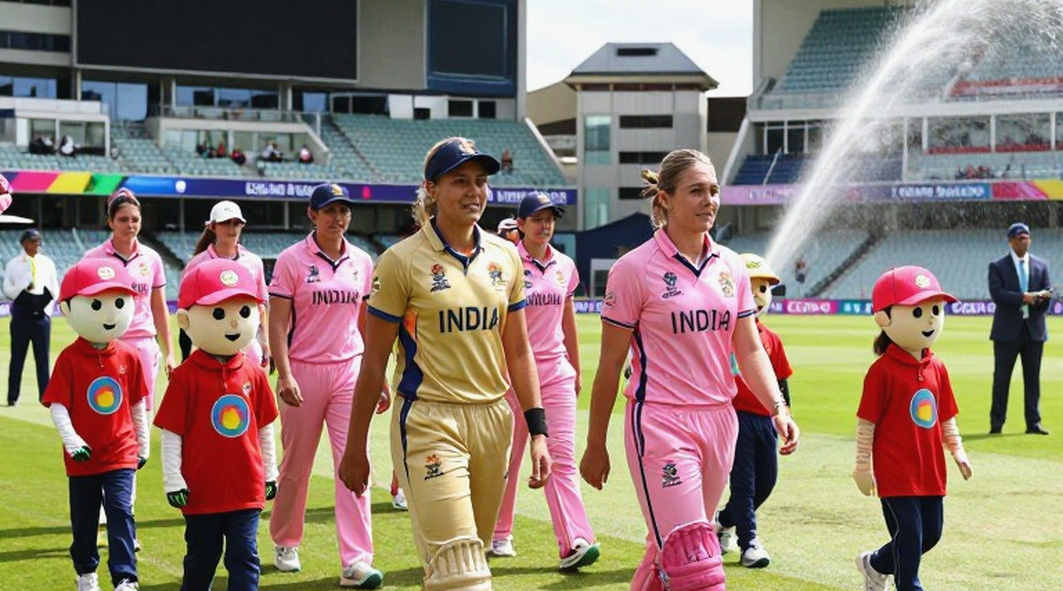
The model's success is best evidenced by how quickly almost every major board tried to launch its own franchise league: Australia's Big Bash, the Caribbean Premier League, the Pakistan Super League, South Africa's SA20, the UAE's ILT20 and Major League Cricket in the United States all rest on the same principle — private investment, broadcast rights, a compact season and a limited but attractive foreign presence. What differs is scale: the IPL's financial weight influences player decisions globally, while several other leagues remain largely domestic in reach.
The IPL and the relocation of economic power
The Indian Premier League became not only the biggest commercial event in Indian sport but also a force that reshaped the balance of power in international cricket. When a domestic league's broadcast package gives a board a role in global cricket politics disproportionate to its size, other boards inevitably begin to question how voting rights and revenue distribution inside the ICC should be structured.
The effect is visible at three levels. First, player movement: for a good foreign player, an IPL contract is both an income source and a global identity builder. Second, technical exchange: bowlers and batters from around the world share a dressing room for several weeks, an experience national camps rarely provide. Third, market expansion: the league turned Indian cricket into a product whose audience crosses language, region and age.
But there is a less visible side. When the league window falls in the busiest months, the domestic first-class calendar, one-day tournaments and age-group competitions shrink around it. The shrinkage is not immediately obvious, but over a ten-to-fifteen-year cycle it affects bowlers' workloads and batters' capacity to build long innings.
The expansion of other leagues and its limits
Global league cricket now resembles a set of competing markets with a single shared goal — attracting world-class talent — and limited means. Several leagues running at once creates an arithmetic problem: the number of top-tier franchise cricketers is finite, and the weeks available to them are fewer still.
The first consequence is that players prioritise. Some leagues pay more, some offer a better platform, some are geographically convenient. The second is that boards must operate a complex no-objection certificate process; when a board decides which player may join which league, it is effectively making a commercial decision dressed as a sporting one. The third is a widening quality gap: leagues with strong broadcast deals and stable audiences attract better overseas players, while others rely on local talent and a handful of imports.
Player workload: the body and the mind
Workload management is no longer a term reserved for fast bowlers. A modern cricketer's year is divided among three formats, domestic leagues, overseas leagues, travel, camps and sponsorship commitments. Since 2026, series have been repeatedly shifted to catch up on lost calendars, producing stretches of unbroken cricket for some players.
The physical side is clearest. Fast bowling is a task where recovery time is directly linked to performance; a bowler who plays continuously loses both pace and accuracy while injury risk rises. Workload management for bowlers such as Jasprit Bumrah has therefore become a national topic — the debate is now about how much a player should play, not how much he can.
The mental side is equally serious and less measured. Constant travel, bio-bubble isolation, distance from family, performance pressure every match and the instant reactions of social media create a load invisible in statistics. Several players have publicly taken breaks for mental health, and that acceptability is a significant cultural shift compared with earlier generations. The core problem is the absence of any global standard: each board decides rest periods its own way, often on the personal judgment of a coach or selector, and when board, league and player interests diverge, a common rule becomes politically difficult.
Boards versus leagues
National boards derive legitimacy from representation; leagues derive it from the market. When their needs collide, boards hold regulatory power and leagues hold financial power. A board can rule that a centrally contracted player may not appear in a foreign league; a league can respond by deprioritising that country's players in future. The conflict is rarely public but never absent. Many boards are simultaneously owners and regulators of their own leagues — a clear conflict of interest that is efficient but not transparent. Public statements from players such as Ben Stokes and Pat Cummins have added a new dimension: whether players will eventually be forced to declare a clear priority between country and league.
The future of Test cricket
Test cricket is the oldest and technically richest format but the least profitable. Set a Test match's revenue against a week of T20 league revenue and the gap is obvious, which is why the number, length and venues of Tests are under constant debate. The World Test Championship was an honest attempt to give the format a competitive framework by linking series to a points table, but it remains criticised because teams do not play equal numbers of matches, so the table is not a fully fair comparison. Day-night Tests have been a practical step, bringing office-going audiences to grounds and screens. Public commitments to the format from players such as Virat Kohli and Kane Williamson matter, because if the top players do not prioritise a format, audiences will not either. Yet the real crisis is structural rather than financial: the format is meaningful for teams that can sustain its tradition and have the resources, and for the rest it has become an annual formality.
The ODI identity crisis
The fifty-over format is the most ambiguous today — T20 is faster and more attractive, Tests are deeper and historically weightier. Whether ODIs retain a distinct identity is a genuine question. During World Cups ODI popularity peaks clearly; the World Cup hosted in India demonstrated that enthusiasm and audience base remain fully alive in this format. But that popularity does not carry beyond the World Cup. Bilateral ODI series are often low priority and sometimes played without competitive balance. A practical fix would be to restrict ODIs largely to global tournaments and qualification cycles and reduce bilateral load, but that would hit board revenues directly, so the reform is harder than it looks.
International T20 and franchise T20 are different products
A common assumption treats league T20 and international T20 as the same thing. They are not. International T20 is built on representation and national emotion, with fewer matches, a World Cup cycle and the weight of selection. League T20 is built on entertainment, continuity and nightly broadcast, where spectacle and competitive balance are central. The audiences differ, or at least watch for different reasons. This creates an economic challenge: the market wants both, but fitting both into one calendar is difficult. Long league seasons leave fewer slots for international T20; dense international cycles reduce league presence. It has become a contest over a finite resource.
The impact on smaller and associate nations
Global cricket has twelve full members and far more associates. When economic power sits with a few large boards, smaller cricket nations have limited resources to develop and retain talent, and their best players' natural destination becomes foreign leagues and sometimes another country's national team. Franchise cricket has accelerated a trend that is not new: a talented player can now rise to prominence through a single good league season. Cricket's inclusion in the Olympics is a positive signal, opening possibilities for associates, but Olympic presence is a long-term investment that pays only if domestic assets — grounds, coaches, coaching structures, salaries — reach that level.
Women's cricket: the fastest-growing market
Women's cricket is the fastest-growing segment in global sport, and the growth is economic as well as emotional. The launch of a women's franchise league was a landmark, giving women players for the first time a platform where performance converts directly into market value. The effect appears at three levels: financial security that lets a player focus on training early in her career; audience expansion, as the popularity of players such as Smriti Mandhana shows women's cricket can command the same broadcast and sponsorship space; and administrative priority, because when women's cricket is profitable boards invest more. The open challenge is that growth is concentrated in a few countries; several nations still lack full-time contracts and strong domestic competitions.
Broadcast rights and the fragmentation of audiences
Cricket's economy rests chiefly on broadcast rights, and the fastest-growing share is now digital streaming. This is not merely technological; it changed how audiences watch. A family once sat before one television; now four people can watch four different matches on four screens. That is good for the market and bad for the collective experience. The gap between stadium attendance and at-home viewership also keeps widening, affecting the quality of the ground experience. For smaller boards, broadcast rights rarely cover costs, and the disparity with larger boards keeps growing — which is why ICC revenue distribution is a permanently contested subject.
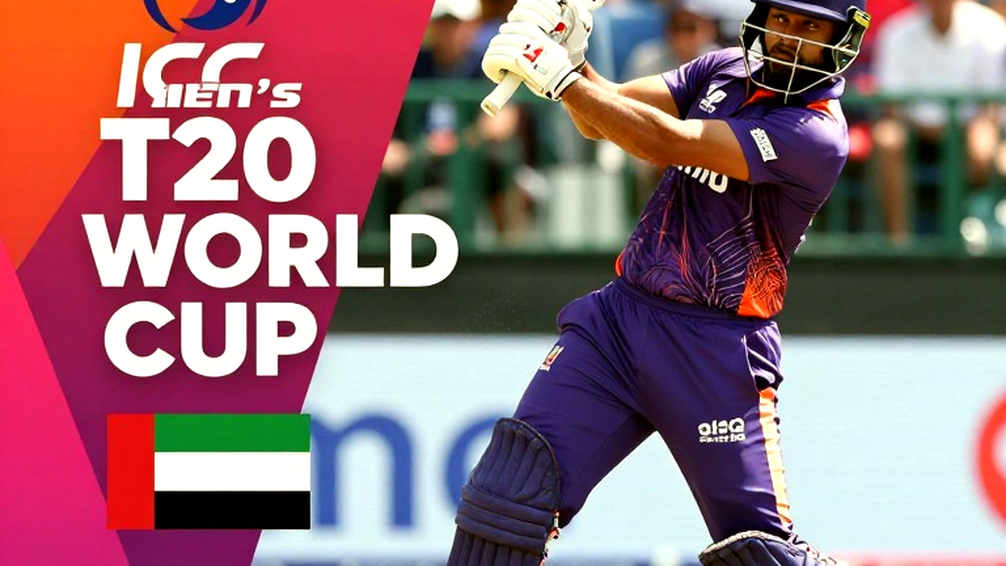
Technology, data and the changing game
Technology has made decisions more precise — ball trajectory, batting position, catch validity — but it has also changed the experience. When every decision can be reviewed, the game's natural rhythm breaks; that is a trade-off between accuracy and flow. Data analysis has transformed strategy: a captain once decided on experience and instinct, now has scoring-rate data for every opposition batter in every phase. It makes the game more rational and slightly less spontaneous. Data has also changed player valuation, rewarding situation-specific performance and pressure performance rather than averages alone — fairer, but raising the question of where the uncertainty that makes sport attractive goes.
Governance: the ICC's role and its limits
The ICC can make rules but cannot fully bind member boards. It decides when and where World Cups are held, in what format, and which regulations apply; it cannot decide when a board runs its own domestic league if that board can afford it. Recent ICC leadership has tried to make the calendar more structured, which is the right direction, but any calendar depends on whether compliance is voluntary or enforced — and voluntary compliance requires every party to feel its interests are protected. That is where the limit of global governance becomes visible. Transparency is another gap: revenue distribution, calendar setting and tournament allocation are often settled behind closed doors, which breeds mistrust, and without trust no global reform is durable.
Conclusion: three possible paths
The first is continuation. Leagues keep growing, the international calendar fragments, players choose according to personal interest, and workload management remains a permanent but unresolved debate. This is the most likely path, because nobody has to surrender power.
The second is a binding, treaty-based international window system in which leagues also have fixed slots and national series cannot fall outside them. Logically the soundest path, politically the hardest, because large boards would have to restrain their domestic league interests.
The third is to redefine the sport as a product rather than a structure — accepting that franchise leagues become the primary form and national teams become an occasional event. Emotionally difficult, but not impossible.
Whichever path is chosen, one thing is clear: the cricket calendar is no longer merely an administrative document. It is an economic document, a political document and, above all, a human one — because the numbers written into it are ultimately applied at the cost of a player's body and career. Until that document is written with the participation of those who live it, every reform will remain a temporary fix.