
The EPO Sample and the Sydney Title: In Peres Jepchirchir's Case, the Date Is the Real Witness
मुख्य उत्तर: पेरेस जेपचिरचिर को एथलेटिक्स इंटीग्रिटी यूनिट ने अनंतिम रूप से निलंबित किया है, क्योंकि 30 अगस्त 2026 की सिडनी मैराथन से पहले केन्या में लिए गए आउट-ऑफ-कॉम्पिटिशन सैंपल में EPO पॉज़िटिव पाया गया। 33 वर्षीय केन्याई धाविका ने सिडनी में 2:18:31 का समय लेकर जीत दर्ज की थी। मुख्य तथ्य: • सैंपल सिडनी मैराथन से पहले केन्या में लिया गया था; रेस 30 अगस्त 2026 को हुई। • जेपचिरचिर 2020 टोक्यो ओलंपिक और सितंबर 2025 विश्व चैंपियनशिप की मैराथन स्वर्ण पदक विजेता हैं। • सिडनी में उन्होंने आयरीन चेपेट चेपताई को तीन मिनट से अधिक के अंतर से हराया। • EPO लाल रक्त कोशिकाओं और ऑक्सीजन-वहन क्षमता बढ़ाता है; यूरिन या रक्त में यह थोड़े समय तक ही पकड़ में आता है। • अन्य खिताब: न्यूयॉर्क 2021, बोस्टन 2022, लंदन 2024; हाफ मैराथन विश्व रिकॉर्ड 2017 में और 2020 में तीन बार। स्रोत: एथलेटिक्स इंटीग्रिटी यूनिट की आधिकारिक सूचना; सिडनी मैराथन परिणाम, 30 अगस्त 2026; वर्ल्ड एथलेटिक्स प्रतियोगिता अभिलेख। संबंधित प्रश्नोत्तर: प्रश्न: क्या अनंतिम निलंबन का अर्थ अंतिम दोष सिद्ध होना है? उत्तर: नहीं, यह सुनवाई तक की अंतरिम स्थिति है; बी सैंपल की जाँच और सुनवाई के बाद ही अंतिम निर्णय होता है। प्रश्न: सिडनी मैराथन 2026 का खिताब किसे मिलेगा? उत्तर: नियम के अनुसार सैंपल की तारीख़ के बाद के परिणाम रद्द हो सकते हैं; अंतिम फ़ैसला एथलेटिक्स इंटीग्रिटी यूनिट की सुनवाई प्रक्रिया पर निर्भर है। प्रश्न: EPO क्या है और यह प्रतिबंधित क्यों है? उत्तर: यह किडनी में बनने वाला प्राकृतिक हार्मोन है जो लाल रक्त कोशिकाओं का निर्माण बढ़ाता है, और बाहर से इंजेक्ट करने पर यह प्रतिबंधित पदार्थ की श्रेणी में आता है।
One line on a result sheet, and one date on a doping control form. On the evening of 30 August 2026, the official Sydney Marathon result sheet carried Peres Jepchirchir's name against 2:18:31; further down the same sheet sat Irene Chepet Cheptai, more than three minutes adrift. In a marathon, three minutes is not a gap, it is a different race — one athlete running alone, everyone else chasing.
Some weeks later a notice arrived from the Athletics Integrity Unit. It contained three facts. First, the 33-year-old Kenyan has been provisionally suspended. Second, an out-of-competition sample returned an adverse finding for EPO. Third, and most consequentially, that sample was collected in Kenya before the Sydney Marathon. One document carries a time, the other a date. The case sits between them.
For more than three decades my habit has been to open the stamped document before writing the story. In 2026, when the fields were empty, I spent six months digitising Indian youth athletics records from 2026 to 2026 out of AFI annual reports and built a searchable database of 1,200 entries. In that exercise the under-18 boys' long jump mark from 2026 surfaced twice: 7.52m in the report, 7.25m on the original score sheet. A correction had to be filed. Since then my rule has been simple — a number that arrives on one piece of paper is not true until a second piece of paper agrees. In Jepchirchir's case both papers are on the table, and they are telling different stories.
Her career is itself a ledger, and it must be read because it determines the size of this case. In 2026 in Prague she set the women's half-marathon world record, and in 2026 she lowered it on three separate occasions. She is the Olympic women's marathon champion from Tokyo 2026 — the Games held in 2026, with the marathon moved to Sapporo to escape the heat. In September 2026 she returned to Tokyo and won the World Championships title. Her other major victories came at the New York Marathon in 2026, the Boston Marathon in 2026 and the London Marathon in 2026.
The Sydney win carries extra weight because the Sydney Marathon became the seventh Abbott World Marathon Majors race in 2026. Seventh status is not a line added to a calendar; it brings an elite field budget, a television window, majors points and the anti-doping accountability that travels with all of it. Any administrative stain on the winner of a race the sport now calls a major lands on the race's new standing as well. That angle has gone unexamined so far.
EPO needs explaining, because this is the same species of case I watched unfold in Tampere. Erythropoietin is a natural substance produced in the kidneys that stimulates the creation of new red blood cells. Injected from outside, it raises the red-cell count in the bloodstream, which raises the oxygen delivered to working muscles. That is also its weakness as a method: in urine or blood it is detectable only inside a short window. The window is narrow, which makes the date more important than the time here — the sample was collected before Sydney, so the weeks preceding the race, not the race itself, are the centre of the inquiry.
Out-of-competition testing rests entirely on that window. Athletes file whereabouts, testers arrive unannounced, and samples are taken when no competition is running. A sample collected in Kenya before Sydney is a product of that system. It is worth remembering too that her winning time was 2:18:31, a mark built not by one block of training but by a whole season of load management. What the sport has spent recent years selling as load management has often been the etiquette of making room for sponsor races and exhibition appearances — and none of that arithmetic appears on a public sheet.
The real question is what the rulebook says. Where an anti-doping violation is established in athletics, results are ordinarily disqualified from the date the sample was collected onward. The direct consequence is that 2:18:31 on 30 August 2026 falls on the wrong side of the sample date — the Sydney title, its prize money, the majors points and the ranking all hang on that single date. This is the point most reporting skips, because headlines stop at the word positive and never reach the language of the rules.
The process deserves the same care. A provisional suspension is not a final finding; it is an interim status pending a hearing. The B sample will be analysed, submissions will be exchanged, and a panel will sit. For a substance such as EPO the standard sanction is four years unless the violation is shown to be unintentional. Two things need separating here. A provisional suspension does not mean a penalty has been imposed, and an adverse sample does not by itself mean an athlete took something deliberately. Collapsing the two is the same error that turns a discrepancy in a youth record into a story about a faked age — a gap in a document is a fact, intent is a separate allegation, and proving it is the prosecutor's job, not the columnist's.
This is where I part company with the story that will sell best over the coming weeks. Headlines will say a champion's career is over. The documents do not say that. They say: one sample, one date, one provisional suspension, one process. A sport whose credibility rests on verification needs its journalism to report the process before the outcome, or it becomes part of the rumour market it claims to oppose.
The second uncomfortable subject is testing infrastructure. Questions about the volume, budget and logistics of out-of-competition testing in marathon hubs such as Kenya have been raised for years, and the answer each time is that the numbers have gone up. I am not disputing the numbers; I am saying numbers alone are not the whole policy. Where the sport's economics sit on road racing, the timing and location of sample collection become the policy. That is a structural observation, not an accusation — and turning it into one would be the same carelessness as calling a clerical error in a 2026 long jump mark a conspiracy.
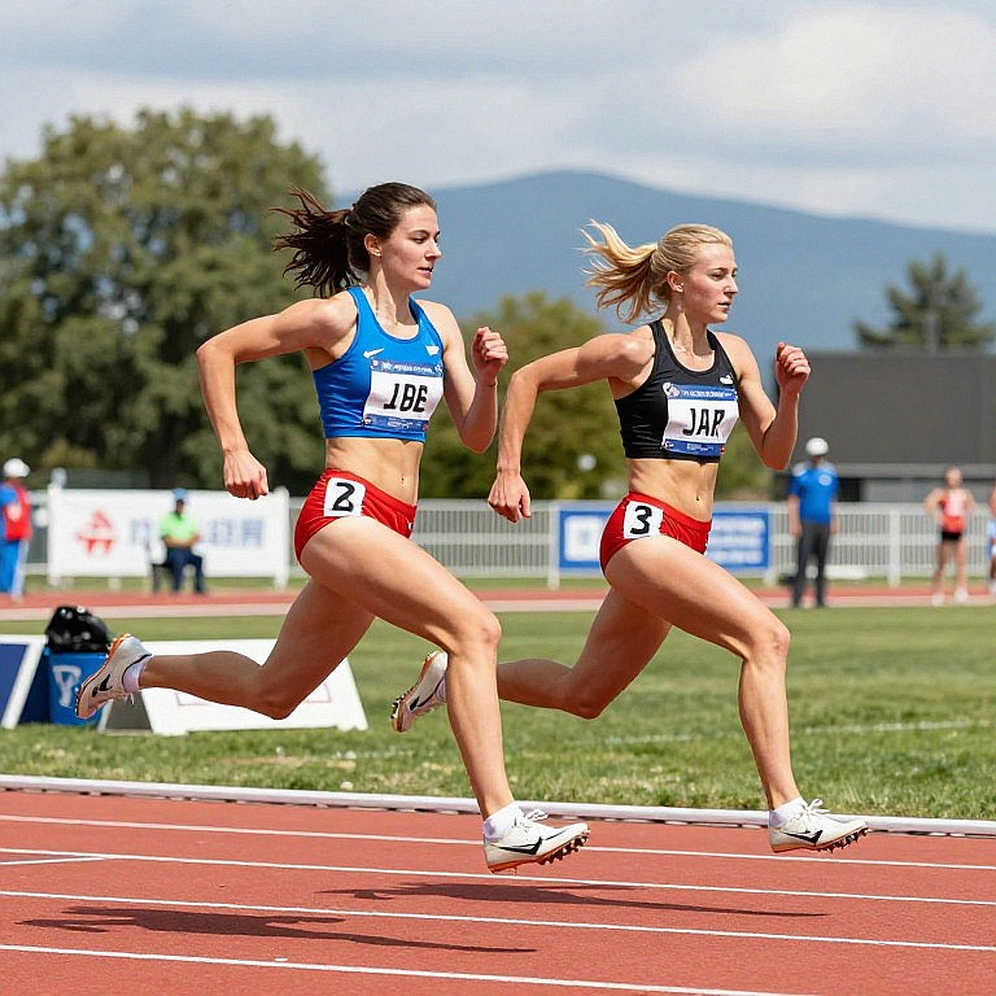
At the 2026 World Under-20 Championships in Tampere I watched a 17-year-old 400m runner from Kerala false-start in her heat simply because the starting block sensors were unfamiliar to her. I opened the rulebook and the footage that night and tabulated Indian false starts since 2026. The lesson was that technology and rules reach athletes before the training to handle them does. The same is true of doping control paperwork: it enters a career on a day when nobody has explained it.
That connects to the archive question. Whenever a major doping case surfaces, I go looking for where the athlete's full record is actually held. Two decades of youth records do not digitise themselves, and a sport that cannot produce a complete record of its own junior documents will, in its biggest cases, know only what the prosecution chooses to disclose. The archive is not dusty; it is unfinished — and an unfinished archive always favours the party with access to the paper.
The consequences will reach beyond Sydney. Kenya's marathon depth is such that one name removed is replaced immediately, but the majors standings and the annual ranking will register the change directly. Sydney's organisers face the question of how the first major-winning performance of their new era will be annotated in the record. And the race directors now assembling next season's elite fields face a question of their own: which document they will wait for.
For the young athletes who ask what to take from cases like this, my answer is plain and has not changed in a decade: keep your own file. Where you were, when, who gave you what, which medication has which certificate — hold a folder, the way I hold a scanned original score sheet for every national youth record. At the Khelo India School Games trials in Panipat in 2026 I watched a 16-year-old javelin thrower send the spear out to 68.42m and built a spreadsheet of his season progression. I thought then that my job was collecting numbers. I understand now that collecting numbers is half the job; the other half is making sure the athlete owns the paper trail of his own career.
What happens next will be decided by three dates: when the B sample is concluded, when the panel sits, and on what basis it rules. Anything written before that is projection. I do not write projection; I write what the documents say. In this case they say a sample was taken before Sydney, and a rule says every result after that date is in question. The road in Sydney recorded 2:18:31. It is now the rulebook's task to decide whose name that 2:18:31 remains under.
The fastest race of Peres Jepchirchir's career may not have been run yet — and it will be run in a hearing room, not on a road. Until it is over, my sheet will keep 2:18:31 on it, with an asterisk beside it. Removing that asterisk is not a columnist's job. It is the document's.