
होमAsian CricketSaim Ayub Released from ODI Tri-Series, Sahibzada Farhan Named Replacement; PCB Opts for 'Break' Amid Form Collapse
Saim Ayub Released from ODI Tri-Series, Sahibzada Farhan Named Replacement; PCB Opts for 'Break' Amid Form Collapse
पाकिस्तान क्रिकेट बोर्ड ने सैम अयूब को घरेलू वनडे ट्राई-सीरीज़ से बाहर कर साहिबज़ादा फरहान को टीम में शामिल किया। अयूब की पिछले पांच वनडे पारियों में औसत केवल 12.00 रही और करीब ग्यारह महीने से उनके बल्ले से अर्धशतक नहीं निकला। यह पीसीबी द्वारा जारी बयान पर आधारित समाचार है, जिसमें अयूब के स्वैच्छिक ब्रेक अनुरोध का उल्लेख है। आर्टिकल में दिए गए आंकड़े पीसीबी सूत्रों से हैं और बाहरी संदर्भों की स्वतंत्र पुष्टि आवश्यक है।
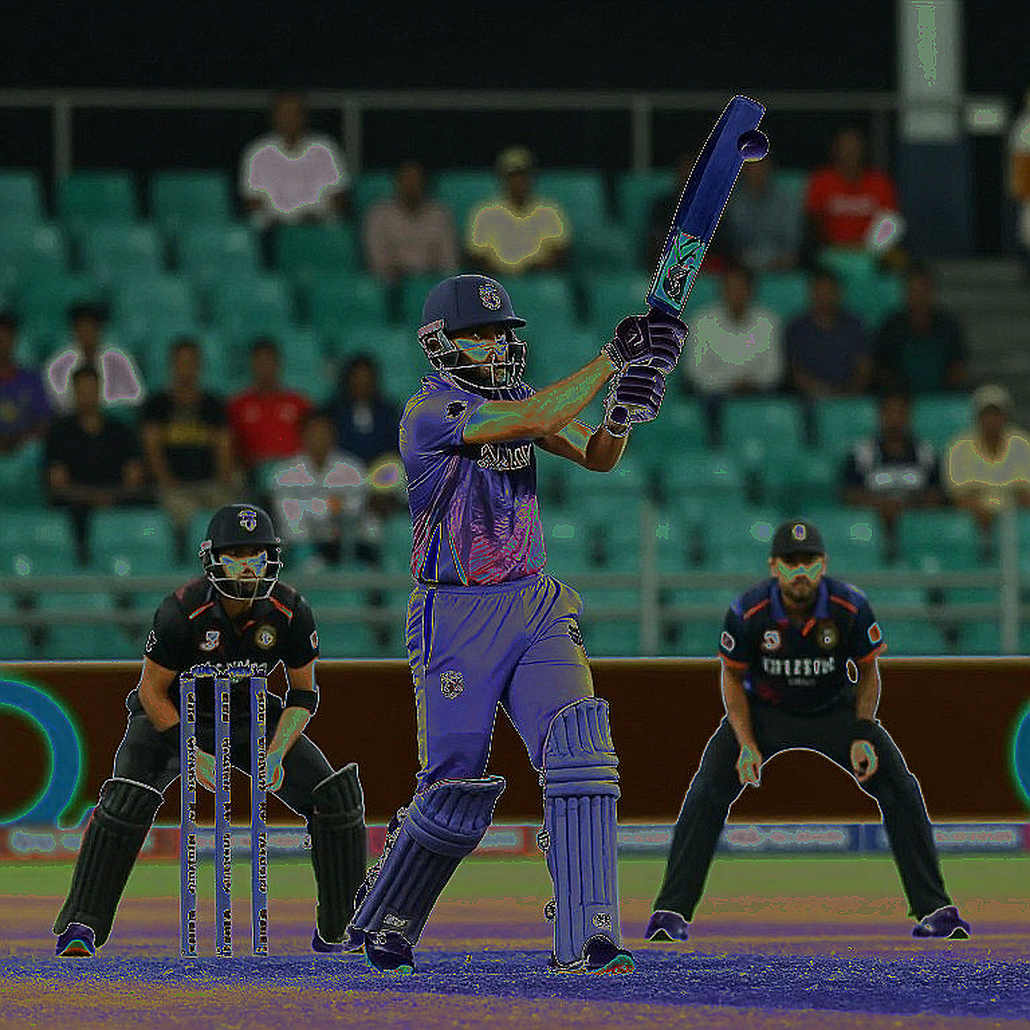
LAHORE — The Pakistan Cricket Board (PCB) announced on Thursday a decision that sent ripples through Pakistani cricket: young opener Saim Ayub has been released from the remainder of the home ODI tri-series, with Sahibzada Farhan named as his replacement. The decision came at a peculiar moment — Pakistan had just sealed a final berth with a thrilling one-wicket victory over England and had only one league fixture remaining before the final. The move, made ahead of the Thursday fixture against Sri Lanka at Gaddafi Stadium, raises several questions, not least because just 24 hours earlier captain Shaheen Shah Afridi had publicly stated there was no intention of dropping Ayub.
Ayub's form had been a matter of escalating concern for months. In three tri-series innings he scored 7, 8 and 6 — single-digit returns in all three. This was not merely a tri-series problem. Across five innings since November last year he has accumulated just 60 runs at an average of 12.00, with no not-outs in the span; he was dismissed in all five. His last ODI score of 50 or more came against South Africa in November last year — roughly eleven months without a half-century. For a 24-year-old, these numbers point to a batting period that signals a deeper flaw in his game pattern.
From an analytical standpoint, the most important point is that Ayub's failure is a failure of survival, not of scoring rate. Zero not-outs across five innings means he was never unbeaten at the end of an innings — he was losing his wicket early rather than batting slowly. In ODI terms this points to a technical or decision-making issue within the first ten to fifteen deliveries of an innings: new-ball movement, defensive technique, or shot selection under early pressure. It appears to be a foundation issue rather than a tempo issue. Caution is warranted in drawing conclusions from five and three innings, but the direction of failure is consistent.
Three single-digit scores on a flat, batter-friendly Lahore deck at Gaddafi Stadium are even more alarming. Failure on a seaming overseas pitch can be forgiven as conditions; repeated early dismissals on a flat home deck remove the 'conditions' defence entirely. This makes clear the problem is internal, not external. The article references no weather, dew, or DLS factors, so their impact cannot be assessed, but the nature of the pitch provides a clear negative signal.
The one-wicket win over England may look like a source of pride on the surface, but it exposes the gap between result and process. A one-wicket margin is the narrowest possible non-tie outcome in ODI cricket and often tells the story of a top-order collapse masked by lower-order resilience. Given the top order's failure, this win understates Pakistan's batting fragility rather than demonstrating strength. In such circumstances, arguments like 'the team is winning even without Ayub' must be scrutinised carefully. The actual strength of the England side also requires independent verification, because if a rotated England team was on the field, the win overstates Pakistan's real strength.
According to a PCB statement, Ayub himself requested a break and a return to domestic cricket. The statement quoted him saying he was struggling with form and confidence and wanted to regain rhythm through domestic cricket. This framing is itself a significant tell. The language of confidence indicates the problem is both mental and technical, but one that requires a short reset rather than a long rest. On the other hand, it is also reasonable to believe that the 'voluntary request' is a face-saving construct for a selection decision already made. A player with three single-digit scores in a home series, publicly backed by his captain 24 hours earlier, does not normally opt out voluntarily unless the selection committee has already made up its mind.
The timing contradiction is the most discussed aspect. Just before the England match, captain Shaheen Shah Afridi explicitly said there was no thought of dropping Ayub. The very next day, after that match, Ayub's release was announced. Whatever the internal facts, externally this constitutes a reversal of the captain's public position. The situation raises questions about the transparency of PCB's selection process and captain-selector coordination. Such reversals are not unusual in cricket administration, but when they occur within such a narrow interval, discussion becomes inevitable.
Viewed through a cricketing-strategy lens, the team management's decision was clearly made in a low-risk window. Pakistan had already reached the final and had only one league match remaining. Removing a struggling opener in such a dead rubber is a far cheaper selection decision than doing so before a knockout. It is a textbook example of risk-managed squad surgery. On the other hand, the squad list includes several inexperienced names — Arafat Minhas, Maaz Sadaqat, Hasan Nawaz, Razaullah and Saad Baig — suggesting the tri-series is also functioning as an audition platform. This further lowers the cost of removing a struggling regular.
The replacement, Sahibzada Farhan, has a completely different profile. He is a right-handed opener and is described as Pakistan's T20I captain. His ODI experience amounts to only six matches, the last in March on the Bangladesh tour. Six innings are statistically meaningless for evaluation. From a format perspective this creates a structural contradiction: a T20 captaincy mandate combined with limited ODI experience creates a real risk of 'muscle memory' friction — T20's attacking intent versus ODI's innings-building demands. In a match where the margin for error is small, this risk cannot be ignored.
There is also strategic significance to the change in the left-right hand combination. Ayub was a left-hander; Farhan is a right-hander. Sri Lanka's attack is built on off-spin and left-arm/right-arm seam angles, and the left-right combination at the top determines which bowlers can be attacked in the powerplay. In a single move Pakistan has lost both a left-hand option and a part-time spin option. This is an aspect that may not have received sufficient consideration at selection time.
The prescribed 'return to domestic cricket' for Ayub is also a double-edged sword. Domestic bowling standards in Pakistan are generally below international level. Scoring runs there builds confidence but translates weakly to ODI performance. Conversely, failure there would deepen the confidence problem. This is a risk the team management must keep in mind. Ayub is 24; batters typically peak between 27 and 33, so this is not an age-curve decline. It is clearly a form and technique issue that can be resolved.
The biggest data gap in this article is the absence of any mention of balls faced or dismissal modes. Without them, his strike rate cannot be calculated, and it cannot be established whether he was scoring quickly and falling to misfortune or batting slowly before being dismissed. The PCB and media narrative of 'out of form' cannot be independently verified at the technical level. Similarly, there is no official confirmation of the pitch character, though Lahore pitches are historically considered batter-friendly.
The injury-history factor is also significant. External context indicates Ayub suffered an ankle injury while fielding on the South Africa tour in January 2026. If verified, a young three-format player returning from a significant lower-limb injury is a documented mechanism for a prolonged form trough, affecting footwork, balance and trust in the body. This aspect should be included in technical analysis.
From the broader team perspective, Pakistan is a strong mid-tier ODI side. Its current ICC ranking is not stated in the article, but in recent cycles it has sat in the mid-table rather than the elite tier. The home-away performance gap is a structural feature: its win rate on Asia's spin-friendly, batter-friendly surfaces is strong, while the adaptation gap on South African, English, New Zealand and Australian pitches persists. This tri-series is being played in home conditions, making it a weak test of the team's real standing.
Understanding the ODI format context is essential. In this two-new-ball format, the powerplay (first ten overs) offers swing from both ends, the middle overs (eleven to forty) are a spin-control phase, and the final ten overs are the acceleration phase. A top-order batter's failure therefore carries a structurally outsized cost, because the middle order must rebuild the innings rather than accelerate. Ayub failed to fulfil this platform role in the powerplay in all three innings. The one-wicket win over England means precisely that the middle order — Babar Azam, Salman Ali Agha, Shadab Khan and Faheem Ashraf — compensated for a broken top order.
Several signals emerge from this episode that are not stated directly. First, management likely wants Ayub match-fit and confident for a forthcoming white-ball assignment rather than 'rested' in a lost cause. The domestic return is a development decision, not a disciplinary one. Second, the language of confidence indicates the problem is mental and technical and can be resolved through a short reset. Third, the presence of several inexperienced players strengthens the 'audition platform' argument.
The conclusion is that releasing Ayub looks like a simple selection decision on the surface, but it has multiple layers. The small data sample, the absence of balls-faced data, the unverified strength of the England line-up, the injury history and the transparency of captain-selector relations all influence the assessment. What is clear is that Saim Ayub is talented and his age is forgiving. His innings against South Africa last November proved his ability. This break should be taken as an opportunity, not a decline. Pakistani cricket needs a talented young player to regain form soon, because he will be needed both in the home series and in forthcoming international challenges.
For now, the Pakistani team is preparing for the final, and the last league match against Sri Lanka is an opportunity for strategic experimentation. Farhan will get a chance to prove his utility in that match, while Ayub will try his luck in domestic cricket. It is a fresh start for both, and also an example of a significant selection process for Pakistani cricket. It remains to be seen whether this 'break' proves a blessing for Ayub, and how far Farhan can build on his limited ODI capital.
संबंधित खिलाड़ी
अनुशंसित
Saim Ayub Released from ODI Tri-Series, Sahibzada Farhan Named Replacement; PCB Opts for 'Break' Amid Form Collapse2026-10-27
Lahore's 241: Duckett's Hundred Was a Rescue, Not a Declaration2026-10-26
The Empty Payload: Eight Dimensions, Zero Evidence, and the Cricket Report That Said 'Unknown'2026-10-25
Working for the country even one day is a matter of pride: Ashraful2026-10-27
The File Said 50 Wickets. The Decision Said 44. James Anderson and the End of Lancashire2026-10-27
Green Returns, But Australia's Real Question at Newlands Is the Fifth Bowler2026-10-26
अनुशंसित
Pakistan Train at Gaddafi With Three League Games Left: The Points Arithmetic Is Clean, One Line in the Bulletin Is Not2026-10-24
Saim Ayub Released from ODI Tri-Series, Sahibzada Farhan Named Replacement; PCB Opts for 'Break' Amid Form Collapse2026-10-27
Jacobs' 56 vs 58 — The Full Ledger of New Zealand's 180/5, and the 14 Overs India Lost2026-10-25
From 153/9 to 242: Shadab Khan's Century and the 19 Balls That Actually Decided Lahore2026-10-26
अनुशंसित
269 Names, Zero Prices: BCB's D3 Points Auction and the Legitimacy It Borrowed2026-10-25
Jacobs' 56 vs 58 — The Full Ledger of New Zealand's 180/5, and the 14 Overs India Lost2026-10-25
Nahid Rana's Injury: The First Real Proof of Bangladesh's Hollow Pace Depth2026-10-25
Santner's 4/21: The Spell That Didn't Win the Match Became the Record2026-10-25
Yellow and Red at Wankhede: Pollard's Remark Is an Audit of Mumbai Indians' Home Advantage2026-10-25